 Posted by
 Pros: Technological marvel fitting all those drivers in
The EST and dual dynamic drivers do contribute to a nice listening experience
Mids are detailed, neutral, natural
Cons: That size shell won’t work for every body
Bass is sometimes boosted more than necessary
Treble can make things sound sibilant and fatiguing
In the grand scheme of things I never imagined getting to a place where I would be given access to devices that cost about $1000 (and over) to stick in my ears and then proceed to have a week of absolute enjoyment listening to music I love and then the ability to stoke back a long lost skill from the early days of the internet and then finally go on to wax eloquent about said devices. In public!
Today’s kilobuck-wallet-emptier comes courtesy of a good friend and is none other than the multidriver chonk monster that is the Thieaudio Monarch Mk3. Let’s dive in!
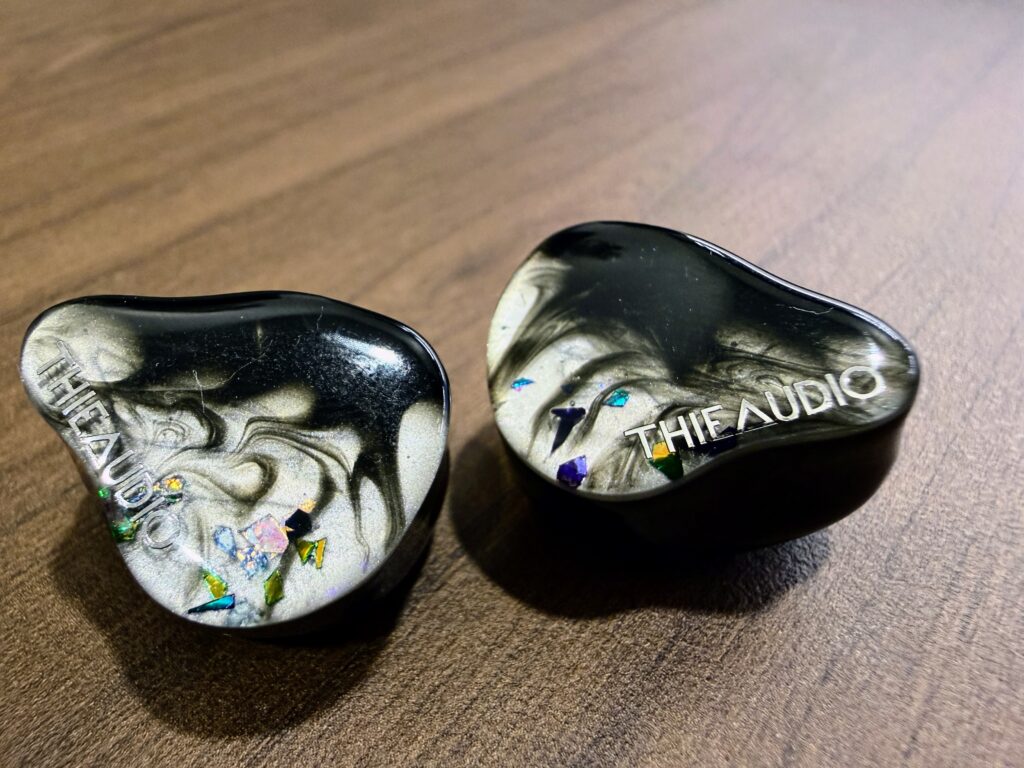
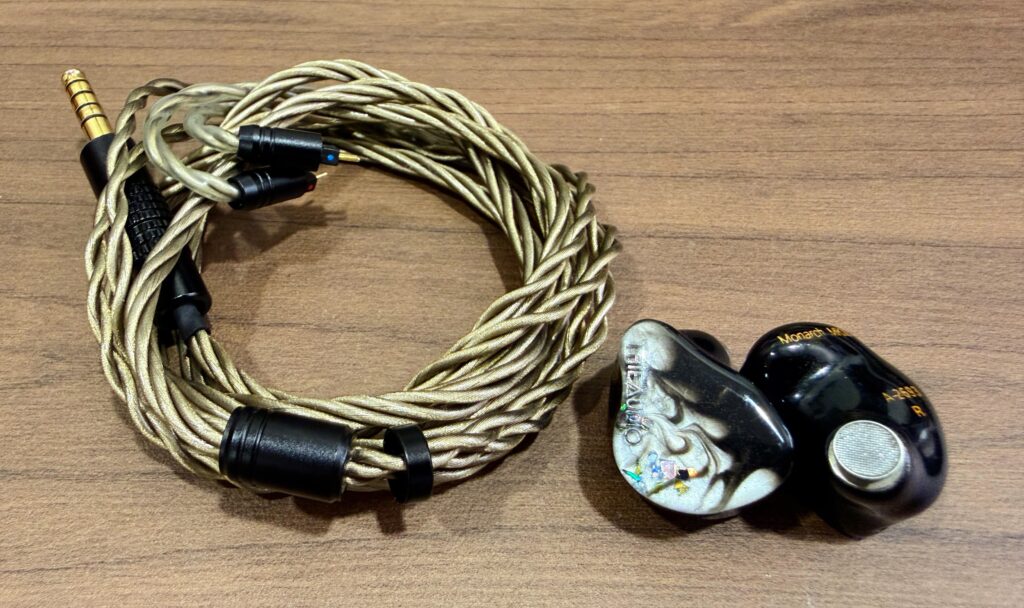
I only got the IEMs and their rather nice cable. So no cool unboxing and jaw dropping awe at the accessories. That will be reserved for the sound.
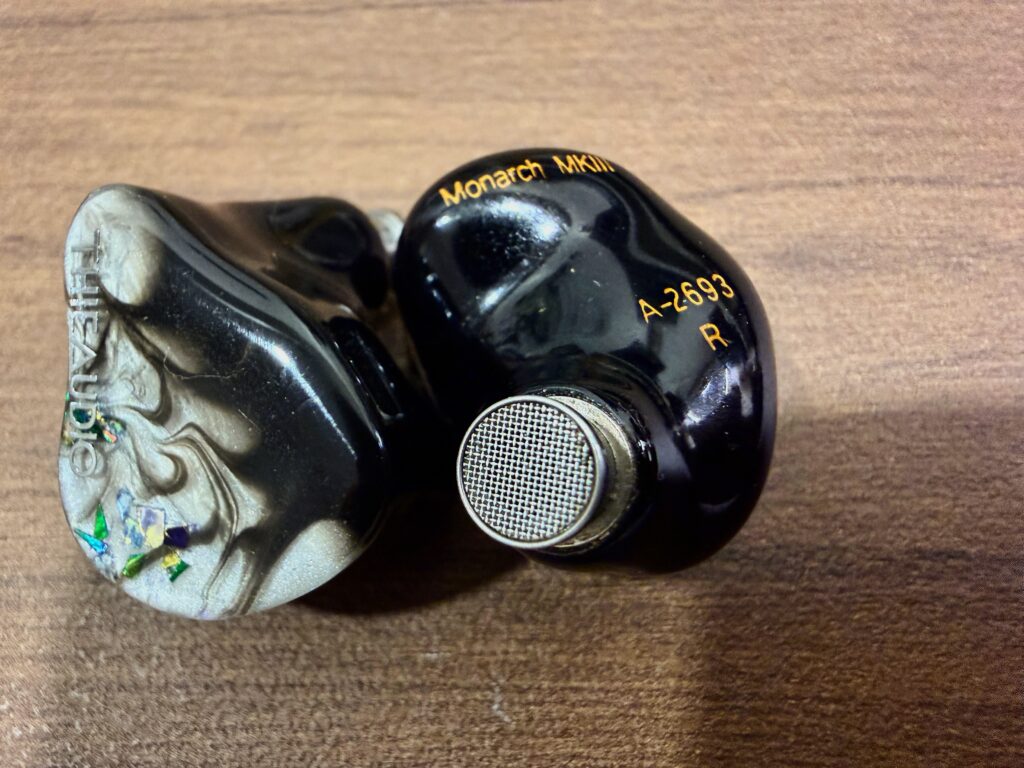
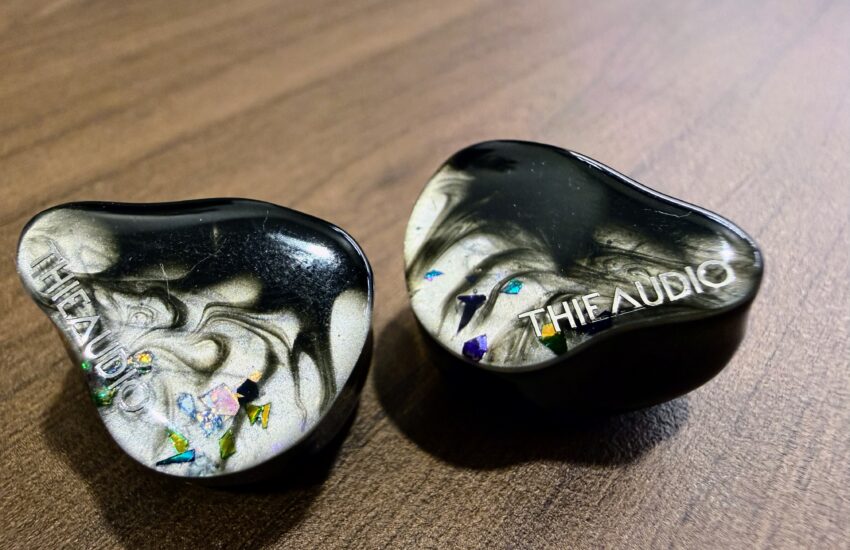
The shells are BIG. 3D printed medical grade resin and all that. With my hated bump. But I suppose if you are stuffing drivers into a shell that small there must be bumps.The nozzles are wide as ever. Probably the widest I have tried and thus for me I needed to size the tips down to M for them to be more comfortable and not feel excessively tight or exert undue pressure on my ear canal. HE Sonic (Large – I know what I just said), Sanci – Medium and Velvet – Medium, S&S (which seems to work when nothing else does) were what worked best. The shells hold Sonion EST, Knowles DWFK 31785 (x2), Sonio 28UAP (x1), IMPACT2 (2 x 10mm Composite DD) (from the company website) The IMPACT2 DD handle the bass, the Sonion EST handles the extreme treble and the rest handle the rest. The cable is fancy silver and graphene and all things nice. It does not tangle easily and has a modular termination with 3.5/4.4/2.5 options.
The IEM has 99dB of sensitivity and an impedance of 20 Ohm, making it fairly easy to drive and I tested it with the VE devastator pro, megatron, Schitt Vestri, Fiio M33.
Bass
What can one say about the bass on the MMK3? The entire ethos of this set is the bass. The sub-bass fills the entire soundstage and is everywhere but with control and refuses to spill over the lip of the cup. The intro to Angel by Massive Attack sounds larger than life and almost of epic proportions and grand. The Mid-bass packs a similar punch but I did find on certain tracks where the bass is meant to be holding a more forward place in the track like People Everywhere by Khurangbin the mid-bass can drown out the mids not by a spillover or muddiness but by just being loud enough to distract from the rest of the guitar work, same on Finesse by Bruno Mars where the bass and kicks make Bruno’s voice take a backseat and to me his voice should not ever do that. Kick drums are punchy and tight, however, without any undue decay and double bass pedal work by Mike Portnoy in New Millenium by Dream Theater and to be fair most of his drumming involves double bass pedal rolls, are clearly heard with emphasis but not bloat. The rhythm section on Wanna Be Startin’ Somethin’ by Michael Jackson sounds natural and gets the groove going. The MMK3 has 2 dynamic drivers arranged in an isobaric (same pressure?) design making it feel like there’s a subwoofer around somewhere. The bass is quite the trip and barring a couple of songs where I felt it was a tad overbearing, the overall implementation leaves little to complain about.
Mids
The assortment of BA drivers that handle the mids give it a fairly nice natural timbre and the voices and instruments sound as they should. Even on tracks that test the mid representation like Ocean by John Bulter and Hanuman by Rodrigo y Gabriela and my favorite BA nemesis – Playing God, the MMK3 performs admirably putting forth a response that is near neutral with no colouration and weird timbre and no details are missed and the details are purely in the mids without faking a sharper treble response. Vocals are also right where they are supposed to be without feeling recessed or enhanced or pushed forward. The nice mix of male and female voices on Islands by The XX and Helplessly Hoping by Girl Named Tom come through showcasing this IEM’s ability to render male voices with weight and female registers with clarity.
Treble
For the most part even for moderately treble sensitive peeps like myself, a majority of tracks are enjoyable simply because of how well implemented the bass and mids are. The EST drivers do add a significant sense of airiness. But this does make some snares in rock and pop (Holler by the Spice Girls is near impossible) hard to tolerate for longer periods of time. Well-mastered tracks are a delight with the details coming through but aggressively energetic pop can get hard to get through. For me at least.
Stage, Imaging and other technicalities
Both the resonant bass and the EST enhanced treble add to give the stage a large feel. Hotel California (Live – Hell Freezes Over) by Eagles sounds like it was played in a vast hall. Africa by Toto also sounds as vast as the continent fuelled by the synth chord work. Imaging is also on point. On Bohemian Rhapsody by Queen, it is possible to close one’s eyes and imagine where each of the voices and instruments are coming from. The neutrality of the mids is seen here, where despite wanting it so, Freddie’s voice is not front and centre till the second verse.
The detail retrieval is excellent without the treble boost playing a role. On Cat by Hiroshi Suzuki, the sounds of an upright bass string snapping off the neck is faithfully reproduced. No thanks to some alchemy and black magic infused Japanese recording and mastering of a 1976 album.
If there’s one major drawback barring the occasionally tiring tuning, which is not a deal breaker per se, it’s that there was no point in the 30 minutes stretch that I tested this IEM, did I feel like it wasn’t there and I could just enjoy the music.
But like the Cat, if it fits it sits.